
Blog
Vacuum Food Sealer Buyer’s Guide: Best 65kPa Picks
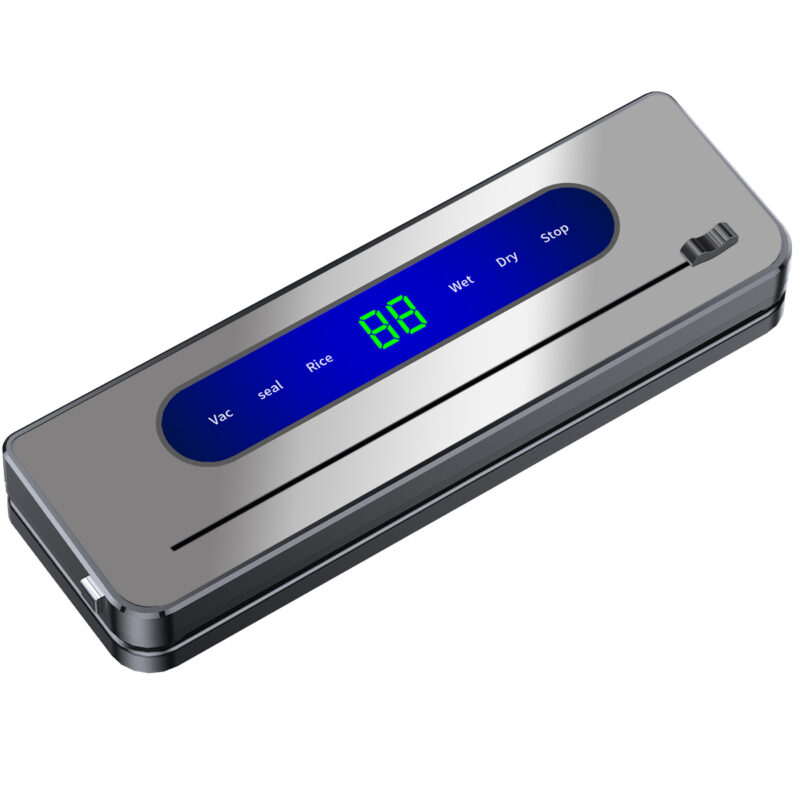
A single returned shipment of weak-sealed units can wipe out the margin on a 500-piece order — so the suction and seal-bar numbers on the spec sheet are the first thing a serious buyer reads. An external vacuum food sealer is a benchtop machine that draws air from the open mouth of a bag and heat-seals it; this guide reads the UAH36G’s real specs (120W, 65kPa, 30cm seal, six modes, built-in cutter) the way a distributor or private-label buyer should, so you can match a model to your market before you commit a deposit.
// 01 — Key takeaways
Rated suction on the UAH36G — mid-range pull that holds 1–2 extra weeks on fresh meat and cooked food, per published vacuum-degree guidance.
Seal-bar width — wide enough to seal large freezer bags and bulk portions in one pass.
Vac, Seal, Rice, Wet, Dry and Stop — dry vs wet protects the pump from drawn-in liquid.
Typical minimum order per model, with smaller trial orders on request and full OEM/ODM.
Warranty on every unit — see our Trust Center for factory figures.
What is an external vacuum food sealer?
An external vacuum food sealer is a benchtop machine that grips the open end of a bag, pulls air out through an internal pump, then fuses the bag closed with a heated strip. This is the most common vacuum food sealer format at retail — the bag sits outside the machine, so the unit stays compact, light and low-cost versus a chamber sealer.
This is the format that dominates household and light-commercial retail. External models are compact and lightweight, easy to store and transport, and far cheaper to land than a chamber unit. The trade-off is that the vacuum draws from the bag opening only, so very wet or liquid-heavy foods need a dedicated wet mode (covered below) to keep liquid out of the pump.
For a distributor, the practical question is not “external or chamber” in the abstract — it is which one your end customer actually buys. Home cooks, meal-preppers and small food businesses overwhelmingly buy an external vacuum food sealer. The UAH36G (ERP model UAH36G) is built for exactly that buyer.
External vs chamber vacuum food sealer: which does your buyer want?
Chamber sealers place the whole bag inside a sealed chamber and evacuate the entire space, giving a deeper, more consistent vacuum and easy liquid handling. They are larger, heavier and pricier — suited to professional kitchens. External sealers trade ultimate vacuum depth for price, size and portability. According to industry comparisons, external units are the right call for occasional use, smaller kitchens and retail price points.
What do vacuum food sealer buyers search for?
Suction power, seal width and “does it handle wet food” are the recurring questions when buyers compare a vacuum food sealer. A retail listing that states the kPa figure, the seal-bar length and the wet/dry modes plainly will out-convert a vague one. That is why the UAH36G leads on three concrete numbers rather than marketing adjectives.
Vacuum food sealer suction: what 65kPa really means
65kPa is the negative gauge pressure the UAH36G pulls at the nozzle — meaning it removes enough air to drop bag pressure 65 kPa below atmosphere. In plain terms that is a mid-range pull: deep enough for fresh meat, fish and cooked food, while staying gentle enough to avoid crushing soft items when paired with the right mode.
Published buyer guidance maps suction to shelf-life bands. Entry-level models (40–60 kPa) suit dry goods and short-term storage. Mid-range models in the 70–80 kPa band suit fresh meat and cooked food, holding freshness 1–2 extra weeks; high-end units above 85 kPa approach commercial grade. The UAH36G’s 65 kPa sits at the top of practical household pull — strong for everyday produce, meat and meal-prep portions.
Why more kPa is not always better
Higher vacuum degree does not always mean better performance — excessive suction crushes soft items like bread, puffed snacks and soupy food. For those, an adjustable or pulse approach matters more than raw kPa. A 65 kPa rating with selectable modes covers a broader food range than a brute-force 90 kPa unit with no soft-item control, which is why mid-range suction sells well at retail.
Power and voltage for export
The UAH36G runs a 120W motor on a 100–240V input, so a single SKU ships to every mains market without a voltage variant. That one-SKU simplicity cuts your inventory complexity and customs classification work across regions.
Seal-bar width: why 30cm matters
The 30cm seal bar is the heated strip that fuses the bag shut, and at 30cm it spans the mouth of standard large freezer and roll bags in one stroke. A wide bar means fewer double-passes, faster throughput and a cleaner single seam — the difference between sealing a bulk meat portion in one cycle versus two.
The heating strip is 3mm wide, which gives a broad weld line that resists peel-back in the freezer. Combined with the built-in bag cutter, the 30cm bar turns a roll of film into custom-length bags on the spot — the vacuum food sealer workflow meal-preppers and small food businesses prefer.
UAH36G spec sheet
Rev. 2026.06
| Spec | This model | Why it matters |
| Rated power | 120 W | Sustains back-to-back household seal cycles |
| Suction | 65 kPa | Mid-range pull for meat, fish and cooked food |
| Sealing width | 30 cm | Seals large bags and bulk portions in one pass |
| Heating strip | 3 mm | Broad weld resists freezer peel-back |
| Flow rate | 4 L/min ± 15% | Short cycle time per bag |
| Voltage | 100–240 V | One SKU for every export market |
| Material | ABS | Light, durable housing for OEM finishes |
| Modes | Vac, Seal, Rice, Wet, Dry, Stop | Matches setting to food type |
Six modes, the bag cutter and wet vs dry
The UAH36G offers Vac, Seal, Rice, Wet, Dry and Stop. Dry mode removes air then seals for low-moisture foods; wet mode adds extra heat and time so liquid does not get drawn into the pump or break the seal. The built-in cutter trims bags to length, and an external vacuum hose port handles canisters and jars.
Dry mode
Dry mode is for foods with little or no moisture — nuts, grains, coffee, dry-cured items. It pulls air and seals on a standard cycle. Used on wet food, dry mode can draw liquid into the machine and produce a weak seal, so mode selection is a real vacuum food sealer feature, not a gimmick.
Wet mode
Wet mode is for raw meat, marinated items and cooked food with some moisture. It evacuates more gently, then seals with extra heat and dwell time so a damp seam still welds. It handles moist food well, but like all external sealers it is not meant for free liquid such as soups and stews.
Built-in cutter and external hose
The integrated cutter lets a user roll out film, cut a custom length, seal one end, fill, then vacuum-seal the other — no separate scissors or pre-cut bags. The external vacuum hose port extends the same pump to reusable canisters and zip valves. A waterproof LED touchscreen and detachable base round out a unit built to be wiped down between uses.
Buyers do not return a sealer because the box looked cheap — they return it because the seam peeled in the freezer. We tune seal-bar heat and dwell to the food, not to a spec-sheet headline.
— Mi Lan, Founder, Guilin Use at Home Technology Co., LTD
Food safety and shelf life: set buyer expectations
Vacuum sealing slows spoilage but does not make food shelf-stable. The USDA treats vacuum-sealed perishables as ordinary perishables: if it needed refrigeration before sealing, it still does after. A clear listing should say so — it reduces returns and supports the safety claims your market expects.
Per USDA Food Safety and Inspection Service guidance, sealed perishables still belong in a fridge at 40°F (4°C) or below or a freezer at 0°F (-18°C) or below. The FDA refrigerator and freezer storage chart gives the unopened windows distributors can quote with confidence. Anaerobic bacteria such as Clostridium botulinum can grow in moist, contaminated foods under vacuum, so listings should never promise room-temperature storage for perishables.
Used correctly, a vacuum food sealer extends practical freezer and fridge life several-fold and roughly halves storage volume — the core selling points your retail customers care about, stated honestly.
How to use the UAH36G (and what to tell end users)
Lay the bag flat across the seal bar so it does not block the pump intake, close and lock the lid, pick the mode that matches the food, then run the cycle. Dry for low-moisture goods, wet for damp items, Rice for grains, Seal alone to weld without vacuuming. Pack these four steps into your manual to cut support tickets.
Cut and fill the bag
Roll out film, cut to length on the built-in cutter, seal one end, then fill — leaving headroom so the mouth sits flat on the bar.
Position on the seal bar
Lay the open end flat across the 30cm bar, clear of the pump intake, then close and lock the lid.
Select the mode
Dry for low-moisture food, Wet for raw meat or marinades, Rice for grains, Seal to weld only. Use the hose port for canisters.
Run, then refrigerate
Let the cycle finish, check the seam, label and date, then store perishables in the fridge or freezer per USDA temperatures.
How we manufacture the UAH36G
We build the UAH36G in our own Guilin factory — in-house tooling, pump and PCBA burn-in, seal-integrity and vacuum testing, then compliance and warranty. Producing on our own lines, not buying in and rebadging, is what lets us hold the seal quality that keeps return rates low.
In-house tooling & molding
The ABS housing and detachable base are molded on our own tooling, so OEM color, logo and packaging changes do not need an outside supplier.
Pump & PCBA burn-in
The 120W pump and touchscreen control board are run-in and checked before assembly to catch early-life failures in the factory, not in the field.
Seal-integrity & vacuum test
Units are checked for the rated 65kPa pull and a clean weld across the full 30cm bar before they leave the line.
Compliance & warranty
We build to export marks including CE and RoHS and back every unit with a 12-month warranty. See our Trust Center for the full list.
B2B sourcing: MOQ, lead time and terms
MOQ is typically 100 units per model, with smaller trial orders on request. Bulk lead time runs about 15–30 days after deposit (samples in 3–7 days), shipped worldwide FOB China on EXW or CIF terms. Standard payment is 30% deposit with the 70% balance before shipment, and Alibaba Trade Assurance is supported.
For distributors, hotels and private-label brands, the UAH36G’s single 100–240V SKU removes per-market voltage variants. Full OEM/ODM covers logo, packaging, color and specification changes, molded on our own tooling. Volume pricing tiers start at $12/unit and step down to $8.30/unit at 5,000 units — request a quote for current rates against your target volume.
Best for
This model fits buyers selling to home cooks, meal-preppers and small food businesses who want a capable, affordable external sealer with a wide bar and a built-in cutter. It is not aimed at high-volume liquid sealing — a chamber unit serves that niche.
Model comparison: UAH36G vs our range
Across our external sealer line, the UAH36G is the wide-bar value pick: 65kPa and a 30cm seal at an entry price, with a built-in cutter and six modes. Step up to 75kPa or a stainless body when your market wants more pull or a premium finish.
| Model | Power | Key spec | From $/unit |
|---|---|---|---|
| UAH36G Best value | 120 W | 65 kPa, 30cm seal, cutter | $8.30 |
| UAH53G | 120 W | 65 kPa, wet & dry | $10.50 |
| UAHFW8 | 110 W | 30cm seal, LED timer | $22.77 |
| UAHFW21 | 110 W | 32cm seal, 75 kPa | $29.00 |
Frequently asked questions
What does 65kPa suction mean on a vacuum food sealer?
What is the difference between an external and a chamber vacuum sealer?
When do I use wet mode versus dry mode?
Does vacuum sealing make food shelf-stable at room temperature?
What are the MOQ, lead time and warranty for wholesale orders?
Can the UAH36G ship to different export markets on one SKU?
Conclusion: matching the spec to your market
For a retail or private-label buyer, the UAH36G is the external vacuum food sealer that says yes to the three questions end customers ask — enough suction at 65kPa, a wide 30cm seal, and wet/dry modes plus a built-in cutter — at a factory-direct price that protects your margin. Read the spec sheet, match the vacuum food sealer to your buyer, and request a quote against your volume.
// Featured model — UAH36G
Vacuum Sealer, 120W, 65kPa, 30cm Seal, Bag Cutter
External vacuum sealer — 65kPa suction, 30cm seal bar, six modes, built-in cutter and waterproof LED touchscreen.
From $8.30/unit
// Similar products
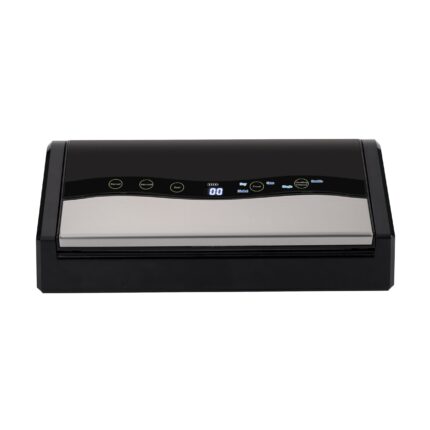
Vacuum Sealer, 110W, 30cm Seal, LED Timer, Touch
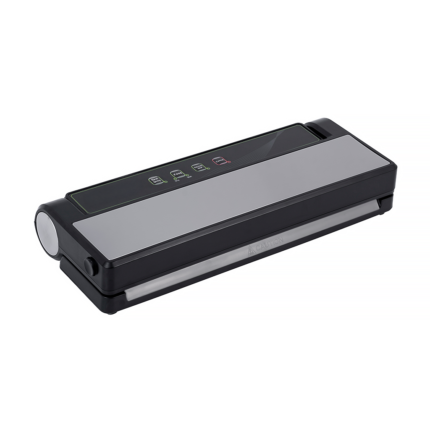
Vacuum Sealer, 110W, 32cm Seal Width, 75kPa Suction
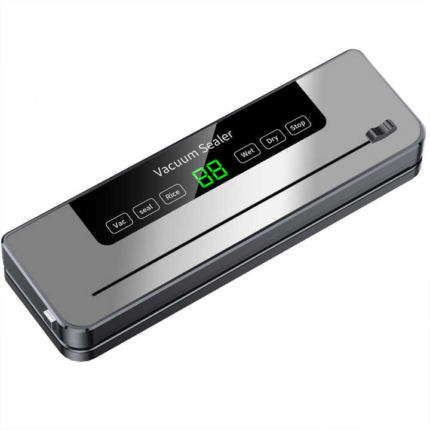
Vacuum Sealer, 120W, 65kPa, 30cm Seal, Bag Cutter
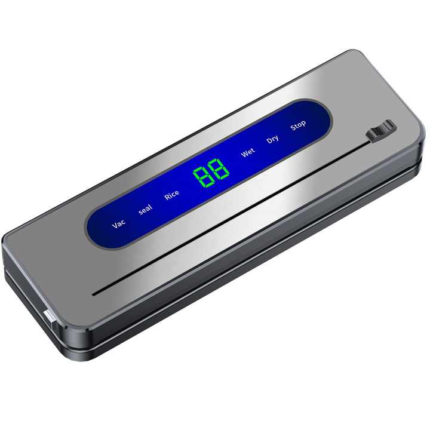
Vacuum Sealer, 120W, 65kPa, 30cm Seal, Bag Cutter
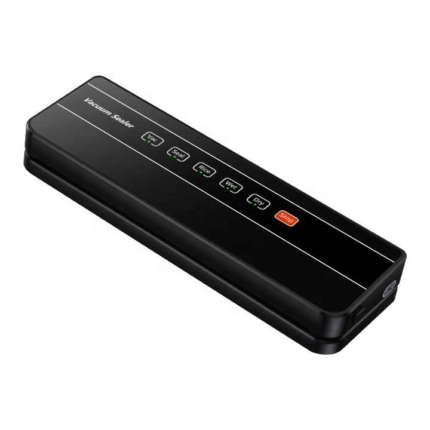
Automatic Vacuum Sealer, 120W, 65kPa, Wet & Dry
Ready to order or need a wholesale quote?
Vacuum Food Sealers China manufactures these appliances direct from our Guilin, China factory — OEM, private-label and B2B welcome. Tell us your market and volume.